
28
January
2026
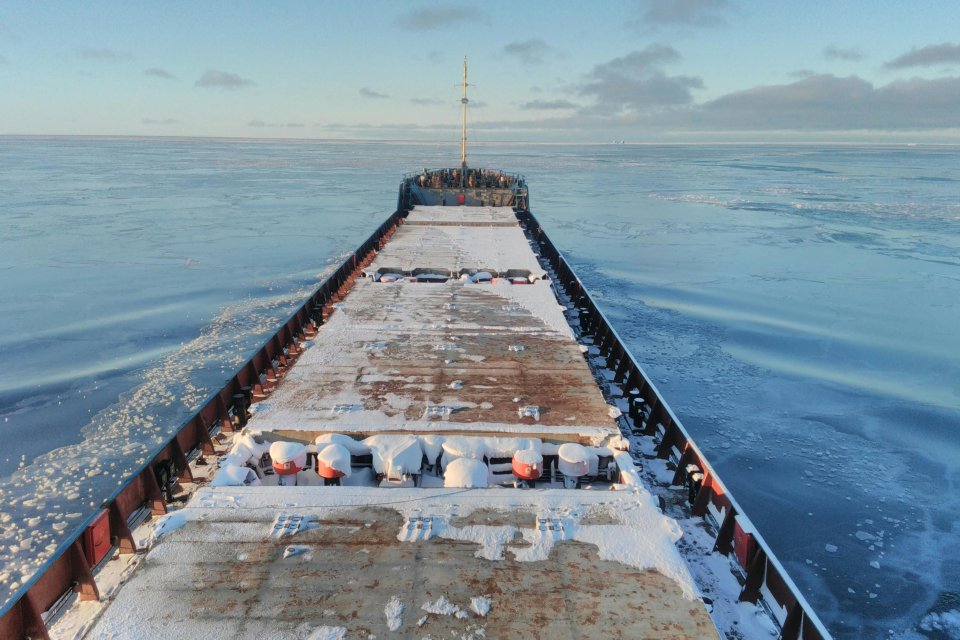
In the Black Sea river-sea coaster market, adverse weather conditions and intensifying ice formation in the Sea of Azov reduced tonnage availability and pushed freight rates higher. On the Azov–Marmara route, freight rates for 3,000 mt wheat cargoes jumped sharply from USD 39–40/mt to USD 47–48/mt. On the Rostov–Marmara route, levels increased from USD 41–42/mt to USD 49–50/mt, while the Rostov–Mersin route strengthened further from USD 58–59/mt to USD 66–67/mt.
In the conventional Black Sea coaster market, conditions remained largely unchanged. Freight rates for 5,000 mt steel shipments on the Novorossiysk–Marmara route stayed around USD 17–18/mt, while 5,000 mt wheat cargoes were quoted at approximately USD 18–19/mt. Market feedback suggested that on the Novorossiysk–Samsun route, wheat freight levels were around USD 20/mt and steel was discussed near USD 19/mt, implying that Marmara-bound cargoes could be expected at roughly USD 2/mt higher.
Despite the poor weather, freight rates for 5,000 mt grain shipments from Ukrainian river ports to Marmara were stable this week, with some indications even pointing slightly lower. A 7,700 mt soy cargo with a 51 stowage factor fixed on the Izmail–Izmir route at USD 27/mt, suggesting that a comparable discharge into Marmara could ease to around USD 24/mt.
In the larger tonnage market, the Baltic Dry Index (BDI) finally turned upward this week, rising from 1,567 points to 1,762 points. Capesize returns were broadly steady, while Panamax and Supramax segments moved higher. The Baltic Supramax Index (BSI) increased from 967 points to 1,026 points, with time-charter equivalent earnings improving from USD 12,223/day to USD 12,975/day. On a route basis, average Supramax earnings on the Black Sea–Far East route edged slightly lower again from USD 16,188/day to USD 16,117/day. US Gulf–Far East returns, although supported by a weaker improvement compared to prior weeks, continued to rise from USD 21,689/day to USD 21,743/day. Far East averages recovered meaningfully from USD 9,510/day to USD 10,586/day.
The Baltic Handysize Index paused its decline and recovered from 588 points to 600 points, while daily earnings rose from USD 10,578/day to USD 10,793/day. In the Black Sea, Mediterranean, and Continent regions, Handysize freight levels increased somewhat on the back of adverse weather, with Black Sea–Mediterranean and Black Sea–Continent returns improving from USD 9,000/day to around USD 10,000–10,500/day, while Black Sea–Far East voyages held steady at USD 13,000/day. On the South America–Continent route, earnings continued to strengthen, climbing from last week’s USD 16,669/day to USD 17,239/day, while Far East averages recorded a slight improvement from USD 9,165/day to USD 9,244/day.
Turning to sales and purchases, reported Ultramax deals included the sale of the 2020 China-built (Nantong Xiangyu) Elizabeth M II for USD 30.5 million and the 2025 China-built Xiang Hang 59 for USD 34 million, with both vessels fitted with exhaust gas cleaning systems (scrubbers). In the Supramax segment, the 2011 China-built 57K DWT Pisti changed hands for USD 12.8 million, while the 2008 China-built Spyros Trader was sold for USD 9 million. In the Handysize segment, the 2008 Japan-built 37K DWT Zimrida was sold for USD 11.4 million, while the 2005 Japan-built 32K DWT Nalinee Naree changed hands for USD 8.1 million. No coaster sales were reported.
We wish you a good week…
Comments ( 0 )